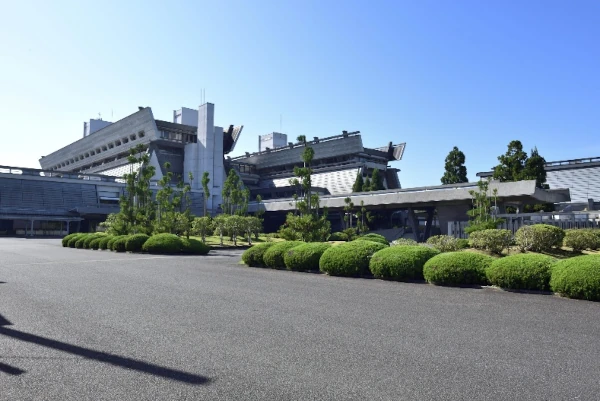
Getting to the venue
Arriving by air
From Kansai International Airport (KIX) to Kyoto Station
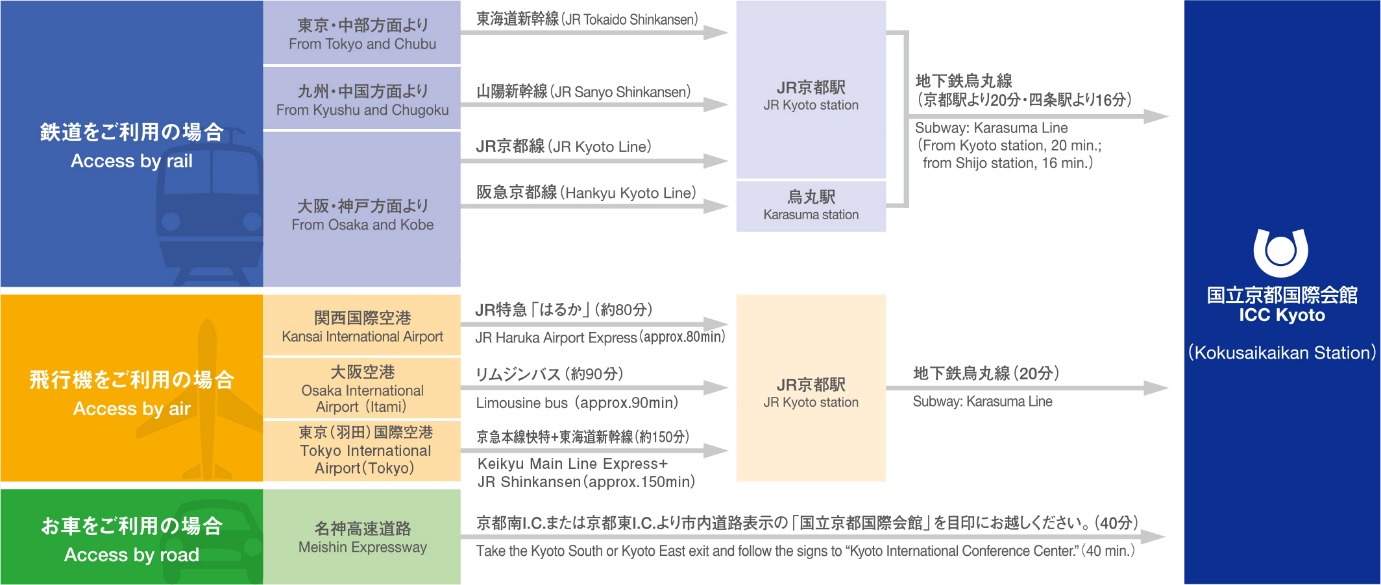
Travel from Kansai International Airport (KIX) to Kyoto Station on the Express Haruka train in 80 minutes.
From Kyoto Station to ICC Kyoto
Take the Karasuma Subway Line from Kyoto Station to Kokusaikaikan Station in 20 minutes.
Arriving by train/public transportation
The closest subway station to the ICC Kyoto is Kokusaikaikan Station.
- 5-minute walk from Kokusaikaikan Station on the Karasuma Subway Line.
Exit the ticket gate and walk through the underground passage to Exit 4-2.
The covered walkway from Exit 4-2 will guide you to our front entrance, keeping you dry on rainy days. - 5-minute walk from the Kokusaikaikan-eki-mae bus stop on the Kyoto City Bus and Kyoto Bus lines.
Taxi information
Location
About Kyoto
Kyoto is Japan’s former imperial capital and one of the country’s most culturally significant cities. It is known for its well‑preserved temples, shrines, traditional gardens and historic districts such as Gion. Alongside its rich heritage, Kyoto offers modern conference facilities, excellent transport links and a strong hospitality infrastructure, making it a highly attractive destination for international congresses. Its blend of tradition and innovation creates a distinctive and memorable setting for events.
Currency
Currency: Japanese Yen (¥)
Japan is traditionally a cash‑oriented country, although credit cards are widely accepted in hotels, larger restaurants and conference venues
Weather in April
April is one of the most pleasant months in Kyoto.
- Average temperatures: approx. 10–20°C
- Conditions: Mild, with a mix of sunshine and occasional light rain
Japanese language
While English is widely spoken in hotels and restaurants, we’ve included a few basic Japanese words and phrases that may come in handy during your stay.
- Hello / Good day: Konnichiwa (こんにちは)
- Thank you (very polite): Arigatō gozaimasu (ありがとうございます)
- Please: Onegaishimasu (お願いします)
- Excuse me / Sorry: Sumimasen (すみません)
- Yes / No: Hai (はい) / Iie (いいえ)
Good to know
- Emergency services: These numbers are toll‑free and available 24/7. In major cities, operators may access English‑language support if needed.
- Police: 110
- Fire department: 119
- Ambulance: 119
- Power plugs and sockets: Delegates travelling from Europe or the UK will need a plug adapter.
- Plug types: Type A (two flat pins) and Type B (three pins, grounded)
- Voltage: 100 V
- Frequency: 60 Hz in western Japan (including Kyoto)
- Time zone: Japan Standard Time (JST): UTC +9 (Japan does not observe daylight saving time).
- Tipping: Tipping is not customary in Japan and may cause confusion or embarrassment. Excellent service is considered part of the job and already included in prices, reflecting the Japanese concept of omotenashi (hospitality). Visitors are encouraged to express appreciation verbally with a polite thank‑you instead.